


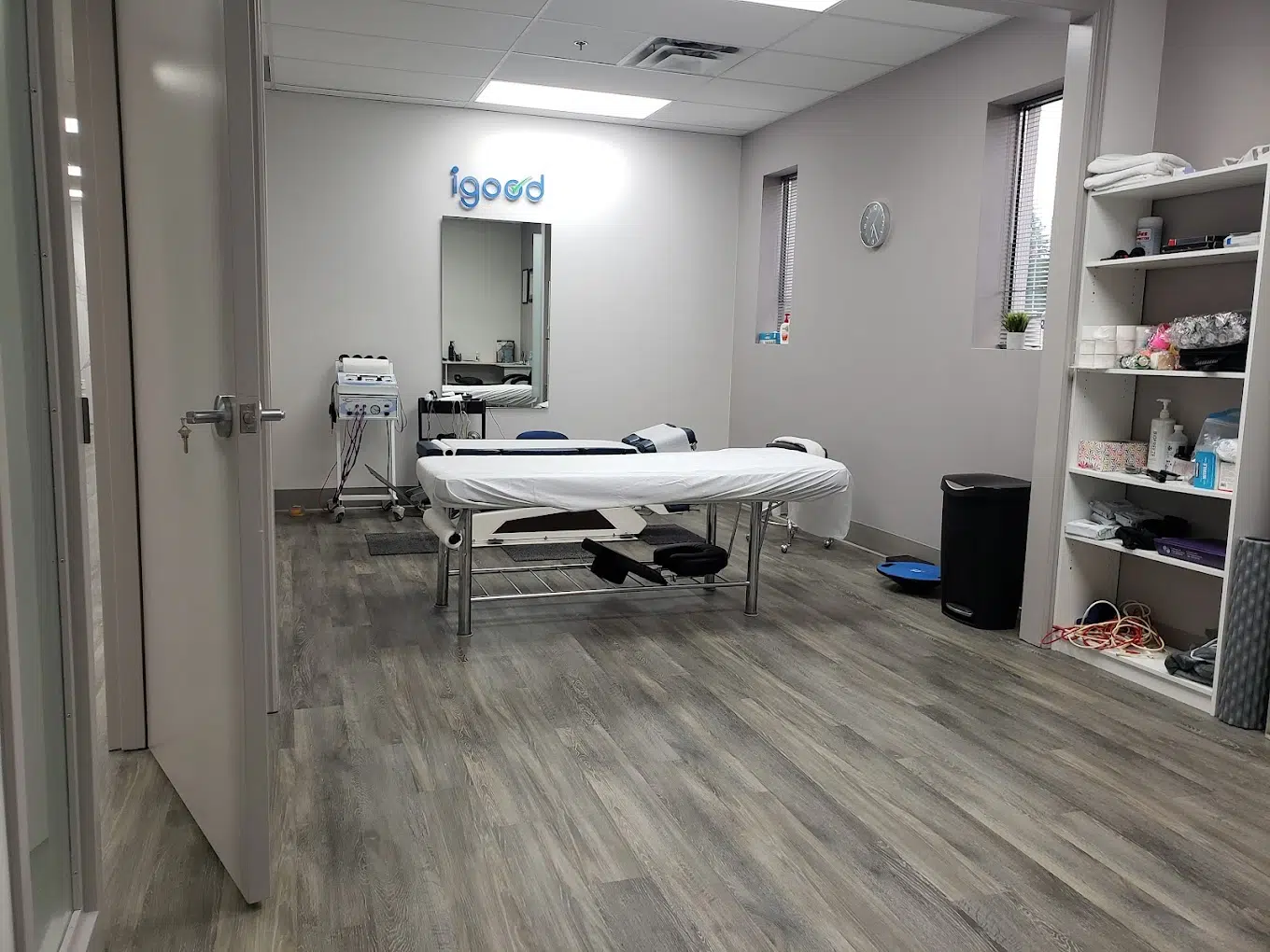
Non-surgical decompression care for low back pain, neck pain, sciatica, disc bulges, herniated discs, and spinal pressure.
Struggling with low back pain, neck pain, sciatica, or disc-related discomfort? At iGood Health Centre in Richmond Hill, we offer non-surgical spinal decompression therapy to help reduce pressure on the spine, discs, joints, and irritated nerves.
Using a specialized decompression table, this gentle treatment may help patients with herniated discs, bulging discs, spinal stenosis, and nerve-related pain. Our team assesses your condition first and creates a personalized care plan to support better movement, comfort, and daily function.
Spinal decompression therapy may be recommended for patients who have pain while sitting, standing, walking, bending, or sleeping. Each session is designed to be comfortable, controlled, and based on your specific condition. Our goal is to help you reduce discomfort, improve mobility, and return to your daily routine with more confidence.
Spinal decompression is not suitable for everyone. It may not be recommended for certain fractures, severe osteoporosis, spinal instability, advanced spinal disease, pregnancy, recent surgery, or some serious neurological symptoms. A clinical assessment is needed before starting care.
Spinal decompression therapy is commonly used as part of a personalized treatment plan for individuals experiencing chronic spinal pressure, nerve irritation, or disc-related pain.
Sciatica can be caused by various factors, including nerve compression in the spine. A proper assessment can help identify possible causes of your symptoms and guide your treatment plan.
This condition involves the gradual narrowing of the spinal canal with age, leading to nerve compression in the spine. This can result in back and leg pain.
A disc in the lower back (lumbar spine) can protrude and compress or pinch nearby nerves, leading to pain that radiates down the legs.
As the spacing between the vertebrae in the lumbar spine decreases, it can lead to potential nerve compression, resulting in discomfort and pain.
The spine is made up of joints, similar to other parts of the body. Over time, these joints can deteriorate due to osteoarthritis, leading to pain and stiffness
Spinal nerve compression can occur for various reasons. Decompression therapy helps relieve this pressure, reducing pain and improving comfort
Many patients choose spinal decompression therapy in Richmond Hill as a non-invasive option to help reduce spinal pressure, nerve irritation, and disc-related discomfort.
Spinal decompression therapy is a non-invasive option for patients looking for conservative care before considering more advanced treatment options.
The decompression table applies controlled traction to gently stretch the spine and help reduce pressure through targeted areas.
This therapy may help create more space between spinal structures, which can reduce pressure on discs, joints, and irritated nerves.
By reducing spinal tension and discomfort, decompression therapy may help patients move, bend, sit, stand, and walk with greater ease.
For some patients with ongoing low back pain, spinal decompression may be included as part of a personalized pain management and recovery plan.
Your treatment plan is based on your symptoms, assessment findings, health history, and how your pain affects your daily activities.
For disc-related pain, sciatica, or nerve irritation, decompression therapy may help reduce pressure and support better comfort over time.
Before recommending spinal decompression therapy, our team reviews your symptoms, health history, movement, posture, neurological signs, and functional limitations. This helps us understand whether your pain may be related to disc pressure, nerve irritation, joint restriction, or another cause.
Your visit begins with a review of your symptoms, health history, imaging if available, and movement limitations. Your provider will determine whether spinal decompression is appropriate for your condition.
During treatment, you lie on the decompression table while gentle, controlled traction is applied to the spine. The goal is to reduce mechanical pressure and support comfort for selected back or neck conditions. Treatment should not be painful. Your provider will adjust the settings based on your comfort and response.
You will lie comfortably on the decompression table while your provider explains the setup and treatment process.
The table applies gentle, controlled traction to help reduce pressure on the spine.
Treatment settings are adjusted based on your condition, comfort level, and provider assessment.
Your provider may recommend a series of sessions based on your symptoms and recovery goals.
Your response is monitored over time so your care plan can be adjusted when needed.
Patients in Richmond Hill choose iGood Health Centre for decompression table therapy because we offer targeted support for back pain, neck pain, disc issues, and nerve discomfort.
Our spinal decompression care is personalized to help reduce pressure, improve mobility, and support long-term spine health through gentle, non-surgical treatment.
Care from licensed healthcare professionals
Assessment before starting treatment
Personalized plans for spinal pain and nerve-related symptoms
Clear explanations and realistic expectations
Non-surgical approach to back and neck pain
Direct billing available for most insurance providers
Convenient Richmond Hill clinic location
Find answers to common questions about spinal decompression therapy, treatment sessions, recovery expectations, and disc-related spinal care.
Spinal decompression therapy is a non-surgical treatment that uses gentle, controlled traction to help reduce pressure through the spine. It may be used as part of a care plan for low back pain, neck pain, sciatica, disc bulges, herniated discs, spinal stenosis, and nerve-related discomfort.
No. Spinal decompression therapy is not suitable for every patient. A proper assessment is needed first, especially if you have osteoporosis, fractures, recent surgery, pregnancy, certain spinal conditions, or other health concerns.
A typical session may take about 30 to 45 minutes, depending on your condition and treatment plan.
Spinal decompression therapy may help some patients with herniated discs or disc-related pain by reducing pressure on spinal structures and irritated nerves. Results vary depending on the severity of the condition, symptoms, health history, and treatment plan.
The number of sessions depends on your symptoms, assessment findings, and how your body responds to care. Your practitioner will explain the recommended plan before treatment begins.
No referral is usually required to book an appointment at iGood Health Centre, although some insurance plans may require one for reimbursement.
DC. IMD. DHS., Doctor of Chiropractic
Registered Chiropractor – Ontario
Clinical focus on spine, joint, muscle, ligament, and nerve-related conditions.
Physiotherapy Resident
Provides physiotherapy-based rehabilitation support, exercise guidance, and recovery-focused care under appropriate clinical supervision.
Our team can help you choose the right service, confirm insurance details, and book an appointment with the appropriate practitioner.
Book Your Appointment at iGood Health Centre
Patient feedback can help new visitors understand the care experience at iGood Health Centre. Reviews often mention our practitioners, clinic environment, appointment experience, and support for pain, mobility, and recovery-related concerns.